

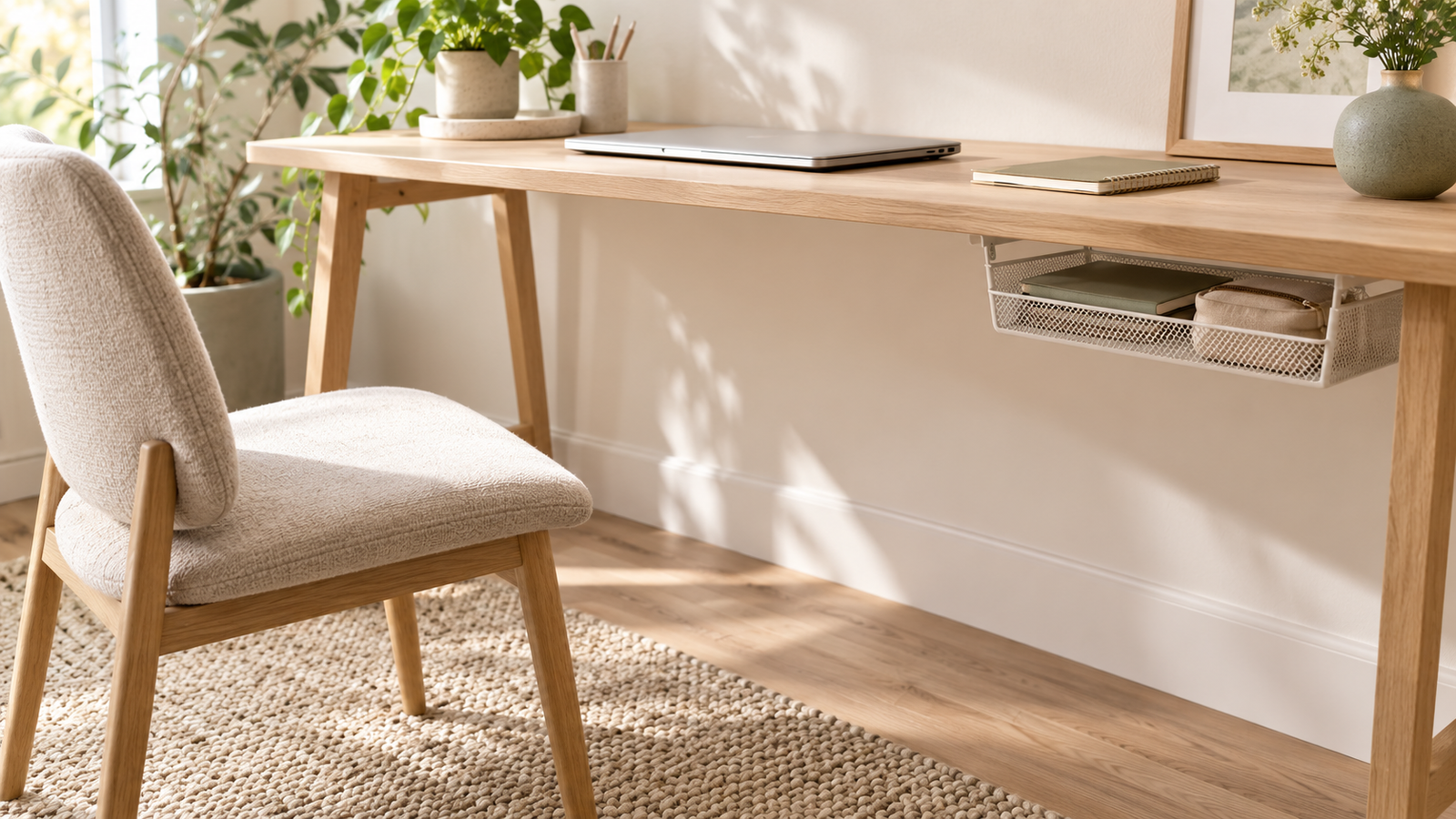
A small desk without drawers can become a landing spot for everything: pens, notebooks, charging cords, headphones, and the paperwork you meant to put away yesterday.
Adding more containers to the desktop can leave even less room to work.
Start by giving your belongings three clear homes: on the desk, within reach, and somewhere else. Then choose storage for the items that actually need to stay nearby.
1. Protect Your Working Space
Before buying an organizer, clear the desk and put back only what you need for your main task.
That might be a laptop, a keyboard, and one notebook. If you write by hand, leave a comfortable area for your arm and paper. If you use the desk for different activities, leave enough open space to switch between them.
Now sort everything else into three zones:
| Zone | What belongs there |
|---|---|
| On the desk | Items you actively use during your main task |
| Within reach | Small essentials you use regularly |
| Away from the desk | Backups, archived paperwork, and occasional supplies |
This gives you a shopping list based on a storage problem, rather than a collection of organizers that look good together.
2. Use Under-Desk Space Without Crowding Your Legs
The underside of a desk may offer useful storage space, but your chair and legs need room first.
Sit in your normal working position before measuring. Check where your knees move, how far the chair slides forward, and whether an organizer would interfere with the desk frame.
Also check:
- Desktop thickness and edge shape.
- Crossbars, aprons, or support rails.
- The attachment method required by the product.
- Access to existing cables.
- Any stated load limit.
For a sit-stand desk, check clearances and cable slack throughout its movement.
An under-desk organizer is useful only when it remains comfortable to work around.
3. Choose a Basket or a Drawer Around Your Routine
An open basket and a drawer solve different problems.
A basket gives you a visible place to return items. A drawer keeps smaller belongings grouped and out of sight. Neither is automatically the better choice.
| Your main need | What to consider |
|---|---|
| A visible home for frequently used belongings | An under-desk basket |
| A contained place for small loose items | An under-desk drawer organizer |
| Storage for large or heavy equipment | A solution specifically rated for that equipment |
| A completely clear knee area | Storage elsewhere beside or above the desk |
Explore The Kindra Under-Desk Storage Basket if an open storage option suits your routine.
If you prefer a drawer format, review The Kindra Under-Desk Drawer Organizer.
Check each product’s dimensions, attachment requirements, and intended use before deciding. Don’t assume either option fits every desktop.
4. Give Small Items Specific Homes
A storage basket can become a second clutter pile if everything lands in it without a plan.
Choose a few categories that match your work:
- Writing tools.
- Small work accessories.
- Current notes.
- Personal items you regularly use at the desk.
Use containers you already own to separate small belongings where helpful. Avoid adding categories for items that could live elsewhere.
A useful test is simple: can you put an item back with one easy action? If returning it requires moving several other things, simplify the setup.
5. Keep Cable Storage Separate From Cable Safety
Loose, unplugged cables can be grouped by use so you can find the right one.
Powered equipment needs more care. Follow the manufacturer’s ventilation and installation instructions, keep cables away from moving parts, and avoid pinching them beneath storage attachments.
Don’t treat a general storage basket as a powered cable-management tray unless it is specifically designed for that purpose.
6. Make the Reset Easy
At the end of a work session, return nearby essentials to their assigned places and remove items that belong elsewhere.
The goal is a desk that is ready for your next task. You don’t need to hide every object or create a perfectly styled setup.
If the same items keep returning to the desktop, reconsider where they belong. Storage should follow your habits closely enough that you can maintain it on a busy day.
Choose One Storage Solution First
Start with the biggest source of clutter.
If your everyday belongings need a visible place within reach, view The Kindra Under-Desk Storage Basket.
If small loose items need a drawer-style home, view The Kindra Under-Desk Drawer Organizer.
Measure first, compare the product details, and choose the option that leaves you comfortable room to work.
Frequently Asked Questions
How do I organize a desk with no drawers?
Keep active work items on the surface, move nearby essentials into suitable storage, and place rarely used supplies elsewhere.
Should I choose an under-desk basket or a drawer?
Choose based on how you access and return your belongings. A basket offers visibility; a drawer provides a contained storage format. Fit and installation requirements matter for both.
Can under-desk storage fit any desk?
No. Desktop shape, thickness, support rails, attachment requirements, and knee clearance can all affect compatibility.